
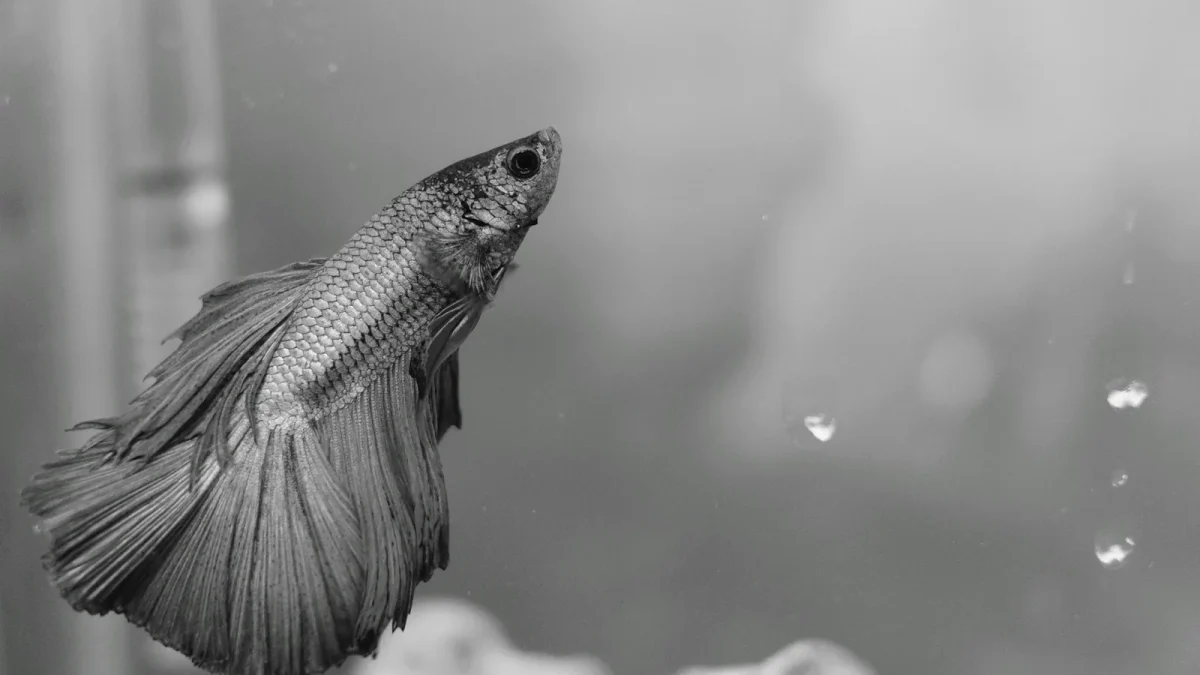
Bettas have a reputation as “easy” fish you can keep in a tiny bowl. That reputation is wrong, and it’s the reason so many bettas die within a few months. The good news: real betta care isn’t hard or expensive. It just means getting a handful of things right. Get them right, and you’ll have a curious, colorful fish that recognizes you and lives for years.
Here’s exactly how to take care of a betta fish — everything a beginner needs to know.
In this guide
- What Is a Betta Fish?
- How to Choose a Healthy Betta
- The Ideal Betta Tank Setup
- Water Temperature and Parameters
- Bringing Your New Betta Home
- How to Feed Your Betta
- Can Bettas Live With Other Fish?
- Common Betta Behaviors Explained
- Common Health Problems and Warning Signs
- Betta Lifespan and Long-Term Care
- Your Betta Care Routine: Daily, Weekly, Monthly
- 7 Beginner Mistakes to Avoid
- Betta Care FAQ
What Is a Betta Fish?
The betta (Betta splendens), also called the Siamese fighting fish, comes from the warm, shallow waters of Southeast Asia — rice paddies, slow streams, and ponds in Thailand and neighboring countries. Two facts about their biology shape everything about their care:
- They’re tropical. Their native water is warm and stable. Cold or fluctuating temperatures stress them and weaken their immune system.
- They breathe air. Bettas have a special organ called a labyrinth that lets them gulp oxygen straight from the surface. This is why they survive in low-oxygen puddles in the wild — and why your tank needs a little open space at the top. It does not mean they can live in a tiny bowl with toxic water.
Male bettas are the long-finned, vividly colored fish you usually see in stores. They’re called “fighting fish” because two males will fight if housed together — which is the first rule of betta keeping: never keep two males in the same tank.
How to Choose a Healthy Betta
Your betta’s health starts at the store. A fish that’s already sick or badly stressed is a hard — sometimes heartbreaking — start, so it pays to choose carefully. Before you buy, look for these signs of a healthy betta:
- Active and responsive — it reacts when you approach the cup rather than lying limp on the bottom.
- Rich, even color — vibrant coloring, not faded or patchy (which can signal stress or illness).
- Smooth, intact fins — no tears, holes, black ragged edges, or fins clamped tight against the body.
- A clean body — no white spots, cottony patches, raised scales, or a swollen belly.
- Clear, bright eyes — not cloudy or bulging.
Resist the urge to “rescue” an obviously sick fish on your first attempt — treating illness is an advanced skill, and a healthy start gives you the best chance of success. Where you can, buy from a shop that keeps its bettas in clean, warm water rather than cloudy, neglected cups.
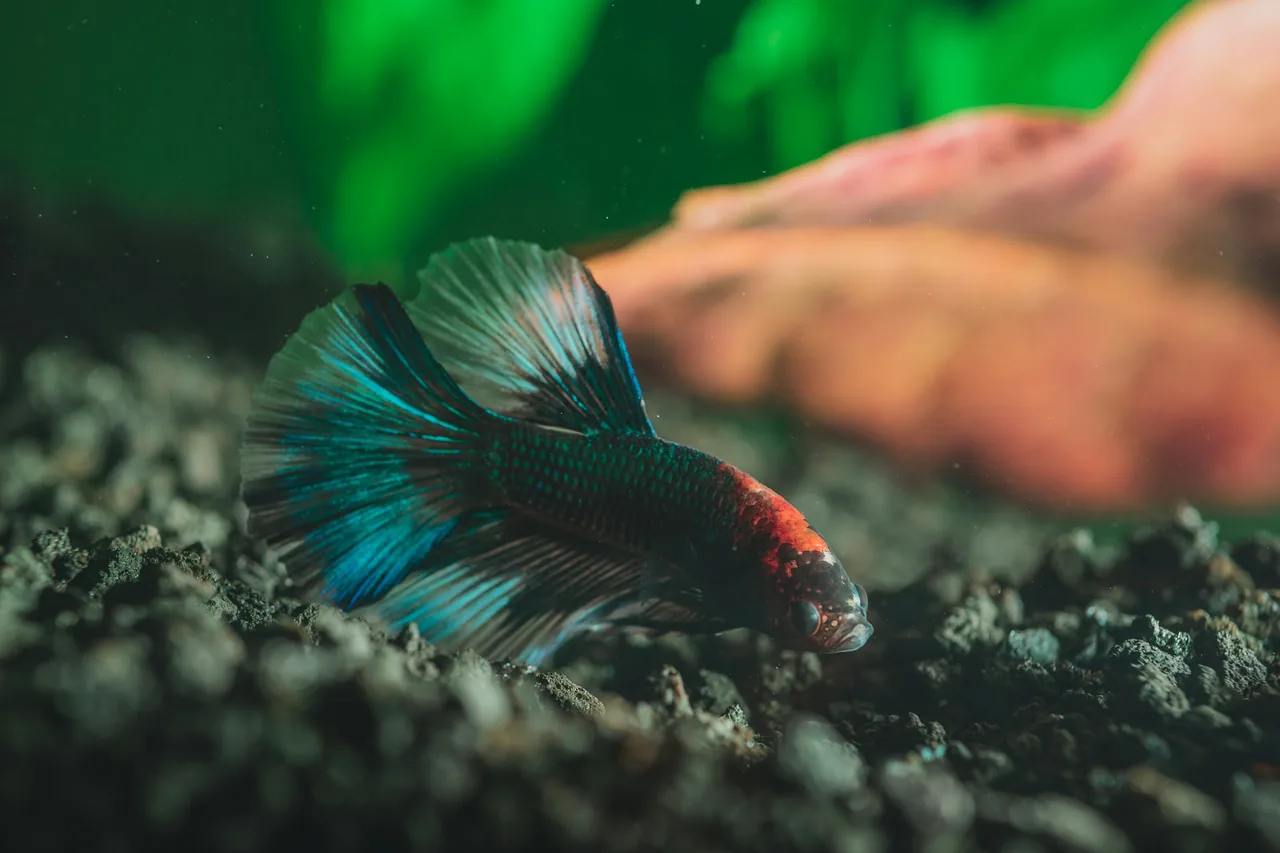
The Ideal Betta Tank Setup
The single biggest factor in your betta’s health is its home. Here’s what a proper setup looks like.
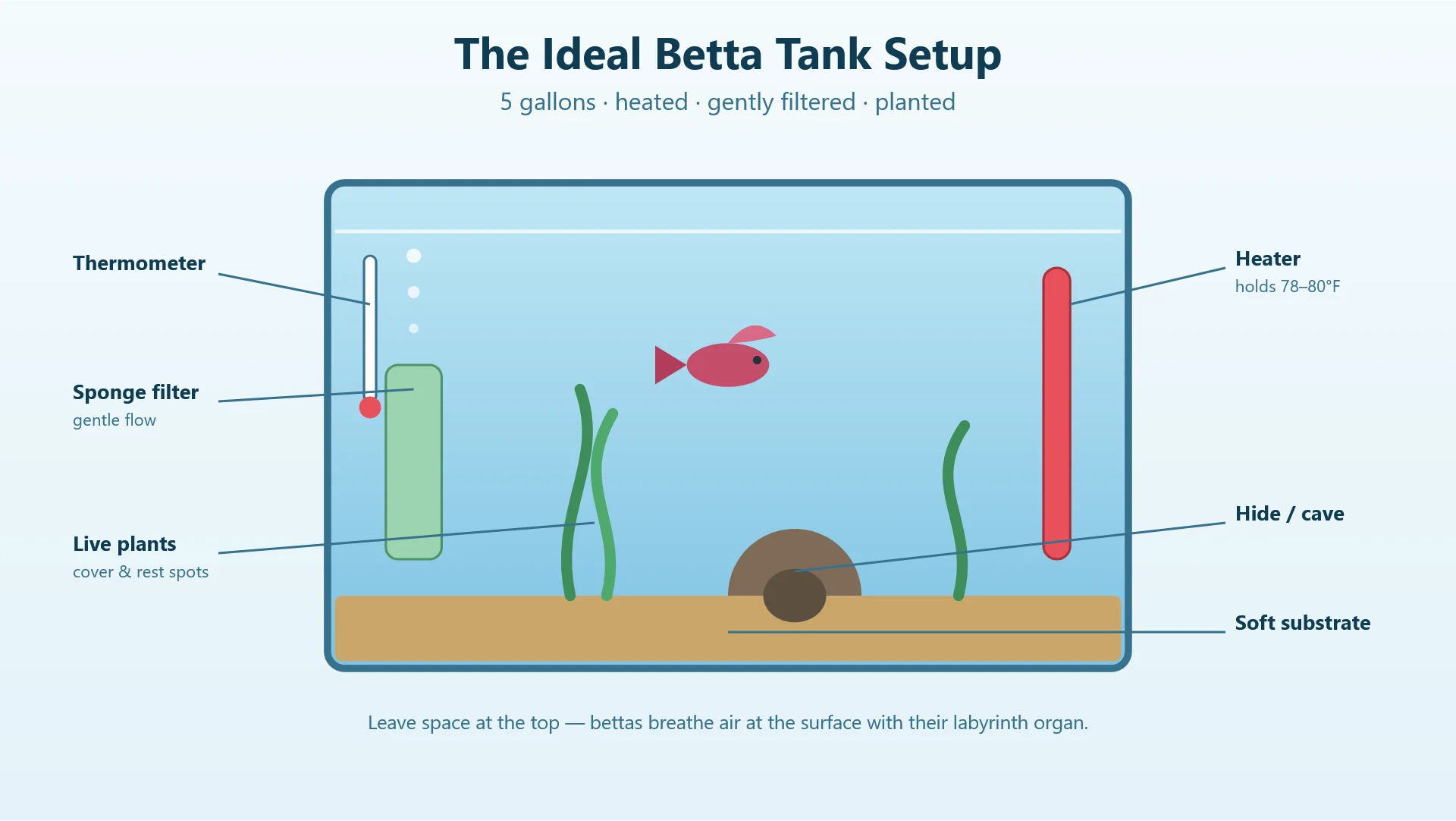
The Ideal Betta Tank Setup
Forget the bowls and tiny “betta cubes.” A betta needs room to swim and, just as importantly, enough water volume to keep conditions stable. Small containers swing in temperature and pollute fast. Five gallons is the realistic minimum for a healthy betta; more is better and easier to maintain.
A Heater
Bettas are tropical and need steady warmth. Unless your home stays reliably in the high 70s°F day and night, you need an adjustable aquarium heater with a thermostat.
A gentle filter
A filter keeps the water clean by housing the beneficial bacteria that break down waste. The catch: bettas have long, heavy fins and are weak swimmers, so they hate strong current. A low-flow filter — a sponge filter is ideal — gives you clean water without blasting your fish around.
A Lid
Bettas are jumpers. A lid (with a small gap for air exchange) prevents the all-too-common tragedy of finding your fish on the floor.
Plants and hides
Live or silk plants give your betta cover and resting spots near the surface. Add a smooth cave or hide so it can retreat. Avoid hard plastic plants with sharp edges — they tear delicate fins.
Soft substrate
Sand or smooth gravel finishes the tank and supports plants and bacteria.
Setting it up, step by step.
Rinse the tank, substrate, and decorations in plain water — never soap. Add your substrate, plants, and hide, then fill with tap water treated with a water conditioner (dechlorinator); this neutralizes the chlorine and chloramine in tap water, which are deadly to fish and to the beneficial bacteria you’re about to grow. Install and set the heater, add the filter, and let everything run. Then comes the most important part — cycling the tank before the fish goes in (next section). Resist the urge to add your betta on day one; a little patience here saves weeks of problems later.
Water Temperature and Parameters
Water quality is invisible, which is exactly why beginners overlook it — and why it’s behind most betta illnesses. You don’t need a chemistry degree, just a basic test kit and these targets:
| Parameter | Target | Why it matters |
|---|---|---|
| Temperature | 78–80°F (25.5–26.5°C) | Drives metabolism, appetite, immunity |
| Ammonia | 0 ppm | Toxic — burns gills, fades color, kills |
| Nitrite | 0 ppm | Toxic |
| Nitrate | Below 20–40 ppm | Less toxic; controlled by water changes |
| pH | ~6.5–7.5 | Bettas tolerate a range; stability beats a “perfect” number |
Cycle the tank before you add your betta. This is the step most people skip and most regret. A new tank has to grow a colony of beneficial bacteria that convert toxic ammonia (from fish waste) into nitrite and then into far-less-harmful nitrate. This process — the nitrogen cycle — takes about 4–6 weeks in a brand-new tank. Adding a fish to an uncycled tank exposes it to ammonia and is the leading cause of early betta death.
Once cycled, a 25% water change each week with dechlorinated, temperature-matched water keeps nitrate in check and conditions stable.
Bringing Your New Betta Home
Never just tip a new betta straight into the tank. A sudden change in temperature or water chemistry shocks the fish and can be fatal. Acclimate it gently instead:
- Float the container.
Turn off the tank lights and float the sealed store cup (or bag) on the surface for about 15 minutes so the temperatures equalize.
- Mix in tank water.
Open the cup and add a small splash of your tank water to it every few minutes over the next 15–30 minutes, letting your betta slowly adjust to the new chemistry.
- Net the fish in.
Gently scoop the betta out with a soft net and release it — then pour the old store water down the drain, not into your tank, since it can carry disease.
Keep the lights dim and the room quiet for the first day. Don’t worry if your new betta hides or skips its first meal; that’s completely normal while it settles into a new home.
How to Feed Your Betta
Feeding a betta is simple, and the most common mistake is doing too much of it.
- How often: once or twice a day.
- How much: just 2–3 quality pellets per meal. A betta’s stomach is only about the size of its eye — that’s all it needs.
- A weekly fasting day: skipping food one day a week helps prevent constipation and bloating, both common betta problems.
- Variety: a good staple betta pellet, rotated with frozen or freeze-dried treats like bloodworms, brine shrimp, or daphnia, keeps your betta healthy and interested.
Always remove uneaten food after a couple of minutes — leftover food rots and spikes ammonia. Overfeeding is the number-one betta-care mistake: it bloats the fish and fouls the water at the same time. Our full betta feeding schedule breaks down exactly how much to feed at each stage.
Can Bettas Live With Other Fish?
Sometimes — but it takes planning, and a betta is never a guaranteed community fish.
Male bettas are territorial. In a tank that’s too small or too bare, they’ll harass or attack tank mates. If you want to try a community setup, you generally need:
- A larger tank (think 10+ gallons) with plenty of plants and cover to break up sight lines.
- Peaceful, non-fin-nipping companions — small schooling fish like ember tetras or harlequin rasboras, pygmy corydoras, or invertebrates like nerite snails and shrimp (with some risk).
- To avoid fin-nippers (like tiger barbs), brightly colored or long-finned fish (which can trigger aggression), and — without exception — another betta.
Every betta has its own temperament, so always watch a new community closely and have a backup plan to separate fish if needed. Our betta tank mates guide lists what works and what usually fails.
Common Betta Behaviors Explained
Bettas are expressive, and new owners often panic at behavior that’s perfectly normal. Here’s how to read your fish.
- Resting on the bottom or on a leaf. Bettas sleep and rest, often wedged in a plant or parked on the substrate, especially after a meal or with the lights off. If your fish is alert and swims normally when you approach, this is usually fine. When it comes with other warning signs, it’s worth investigating.
- Blowing bubbles at the surface. A cluster of bubbles is a bubble nest — a healthy, natural behavior where a male prepares to breed. It’s a sign of a content fish, and you don’t need to remove it.
- Flaring. When a betta puffs out its gills and fins, it’s a territorial display — at its reflection, another fish, or even your finger. A little flaring is normal and even good exercise; constant flaring means it’s stressed by something it can see.
- Glass surfing. Frantically swimming up and down the glass often signals stress — usually poor water conditions or a tank that’s too small or too bare.
Common Health Problems and Warning Signs
Catching problems early is the difference between a quick fix and a lost fish. Learn your betta’s normal look and behavior so you notice changes fast.
General warning signs: faded or whitening color, clamped fins (held tight against the body), lethargy, loss of appetite, or labored breathing. Almost always, the first thing to check is your water — test ammonia, nitrite, and temperature before anything else.
Use this quick reference to act fast — but remember, the first move for almost any symptom is to test and correct your water:
| Symptom | Likely cause | First step |
|---|---|---|
| Not eating | Cold water, stress, poor water, wrong food | Check temperature & water; try a different food |
| Fading or whitening color | Stress, bad water, poor diet, infection | Test water; review diet |
| Ragged or receding fins | Fin rot (bacterial), from poor water | Improve water quality; clean the tank |
| White, salt-like spots | Ich (parasite) | Raise temperature slowly; treat with a trusted method |
| Floating, sinking, or tilting | Swim bladder, often from overfeeding | Fast 1–2 days; then feed less |
| Bloated belly, raised scales | Constipation or dropsy | Fast; if scales “pinecone” outward, see a vet |
A few specific issues to know:
- Not eating. Often caused by cold water, poor water quality, stress, or the wrong food — but sometimes illness. Our full guide on why your betta isn’t eating walks through every cause and fix.
- Losing color / turning white. Stress, bad water, poor diet, or infection can drain a betta’s color. See why is my betta turning white.
- Fin rot. Ragged, receding, or blackening fin edges — a bacterial issue almost always rooted in water quality. See betta fin rot.
- Swim bladder issues. Trouble staying upright or floating oddly, often from overfeeding or constipation.
- Ich. Tiny white spots like grains of salt — a common parasite.
If you already suspect a specific illness, this quick reference maps the conditions beginners run into most often:
| Condition | What you’ll see | Likely cause | First step |
|---|---|---|---|
| Ich (white spot) | Tiny white, salt-like spots on the body and fins | Parasite — often after a chill or stress | Raise the temperature slowly to ~80 °F and treat with a trusted ich remedy |
| Fin rot | Ragged, receding, or blackening fin edges | Bacterial — almost always rooted in poor water | Improve water quality, clean the tank, and test daily |
| Velvet | A gold or rust-coloured dusty sheen, clamped fins, lethargy | Parasite (Oodinium) | Dim the lights, raise the temperature, treat with a trusted method |
| Dropsy | A swollen belly with raised, “pinecone” scales | Internal infection or organ failure | Often late-stage — isolate the fish and consult an aquatic vet |
| Swim bladder | Floating, sinking, or tilting when resting | Overfeeding or constipation, usually | Fast 1–2 days, then feed less; try thawed daphnia |
See a vet when in doubt
Finned Friends gives you the information to spot and understand these issues, but we’re not a substitute for a vet. If your fish is clearly sick or not improving, consult a qualified aquatic veterinarian rather than guessing.
Betta Lifespan and Long-Term Care
A well-kept betta typically lives 3–5 years. Many feel they “don’t last long,” but that’s usually because pet-store bettas are already several months to a year old when sold, and because poor conditions cut their lives short.
To get the full lifespan:
- Keep the water warm, clean, and stable — this single habit prevents most problems.
- Feed a varied diet in correct portions, with a weekly fast.
- Do regular partial water changes and test your water.
- Watch your fish daily so you catch issues early.
As bettas age, they naturally slow down, rest more, and may lose a little color — that’s normal aging, not necessarily illness.
Your Betta Care Routine: Daily, Weekly, Monthly
Keeping a betta healthy comes down to a simple, repeatable routine. Once it becomes habit, day-to-day care takes only a couple of minutes.
| How often | Task |
|---|---|
| Daily | Feed 1–2 small portions; glance at your fish for normal color, fins, and behavior; check the thermometer reads 78–80°F |
| Weekly | 25% water change with dechlorinated, temperature-matched water; remove any debris; one fasting day |
| Every 1–2 weeks | Test the water — ammonia 0, nitrite 0, nitrate below 20–40 ppm |
| Monthly | Rinse filter media in old tank water (never tap — it kills the bacteria); trim plants; wipe algae from the glass |
The golden rule is stability. Bettas handle a steady, slightly-imperfect environment far better than one that swings around. A consistent routine is exactly what gets you to that 3–5 year lifespan.
7 Beginner Mistakes to Avoid
- Keeping a betta in a bowl or tiny tank.
Too small to stay clean or warm.
- No heater.
Cold water is a slow killer.
- Skipping the nitrogen cycle.
Adding a fish to an uncycled tank exposes it to toxic ammonia.
- Overfeeding.
Bloats the fish and pollutes the water.
- A filter that’s too strong.
Exhausts a long-finned, weak swimmer.
- Bad tank mates.
Fin-nippers, bright fish, or another betta.
- Not testing the water.
You can’t fix what you can’t see — a basic test kit is essential.
Betta Care FAQ
Do betta fish need a filter and a heater?
In almost all cases, yes. A heater keeps them in their 78–80°F comfort zone, and a gentle filter maintains clean, stable water.
How big should a betta tank be?
At least 5 gallons for a single betta. Bigger tanks are healthier and easier to keep stable.
How long can a betta go without food?
A healthy adult can safely go several days without eating, which is why a weekly fasting day is fine and even beneficial.
Why is my betta resting at the bottom?
Often it’s just sleeping or resting — normal if it’s otherwise alert. Paired with faded color, clamped fins, or not eating, check your water and see our troubleshooting guide.
Can two bettas live together?
No — never two males. Some females can live in a carefully managed “sorority” in a large tank, but that’s an advanced setup, not a beginner one.
How do I know if my betta is happy?
A content betta is active and curious, with smooth flowing fins, rich color, and a healthy appetite — and males may build bubble nests. Constant hiding, clamped fins, or faded color point to stress.
Do I need to cycle the tank if I only have one betta?
Yes. Every fish produces ammonia, and a single betta in an uncycled tank is still exposed to toxic spikes. Cycling isn’t optional, even for one fish.
How often should I clean the tank?
A 25% water change each week is plenty for a cycled tank. Avoid full “deep cleans” that replace all the water — they destroy your beneficial bacteria and restart the nitrogen cycle.
Ready to dive deeper? Start with setting up your betta’s tank, dial in your feeding schedule, and bookmark our betta troubleshooting guides for whenever something looks off. Your betta will thank you for it. 🐠

Maya Rivers
Maya Rivers has kept freshwater aquariums for over 15 years — everything from a single rescued betta to heavily planted community tanks. She started Finned Friends to give beginners the clear, calm answers she wished she'd had the night her first betta stopped eating. Every guide is researched against current aquarist and veterinary-informed sources and dated when it was last reviewed. Maya is an enthusiast and researcher — not a veterinarian — so when a fish needs medical help, Finned Friends always tells you to see a qualified aquatic vet.