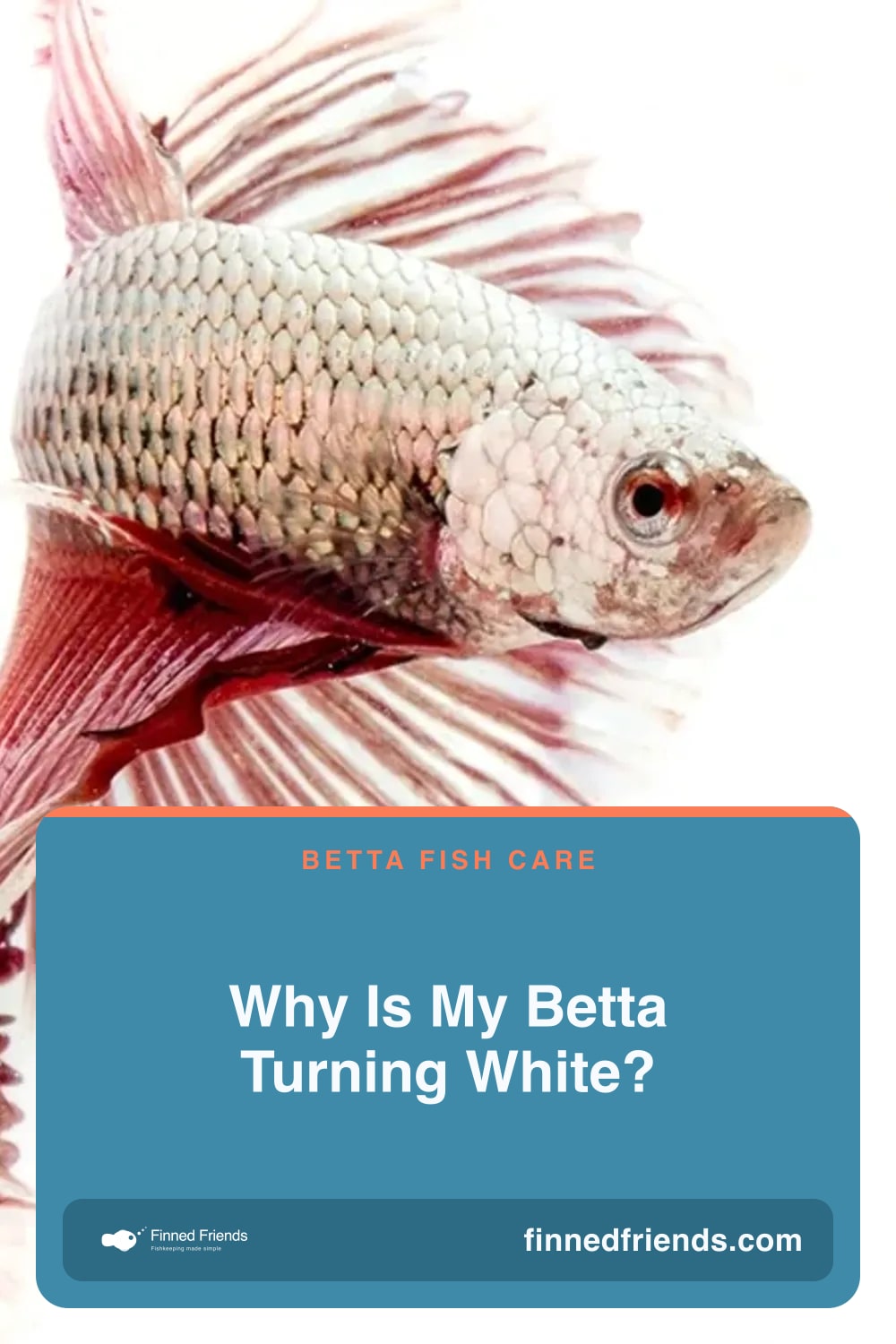
You’re staring at your betta, noticing pale spots that weren’t there last week, and the only question that matters is: is this normal, or is my fish sick? The honest answer is that it could be either — and the difference comes down to a few specific tells. Use the table below to place what you’re seeing, then read the matching section.
In this guide
- 01 Quick Answer: Harmless Color Change vs. Disease
- 02 Betta Turning White: Symptom → Cause → First Action
- 03 Harmless Reasons Your Betta Is Turning White
- 04 Disease Reasons — When White Is a Warning
- 05 Fungus vs. Columnaris — The Difference That Saves Your Fish
- 06 What To Do Right Now (First-Aid Checklist)
- 07 How to Keep Your Betta’s Color Vibrant
- 08 FAQ
- 09 Sources & Further Reading
Quick Answer: Harmless Color Change vs. Disease
Most “betta turning white” cases fall cleanly into one of two buckets, and you can usually tell them apart by texture and behavior, not color alone.
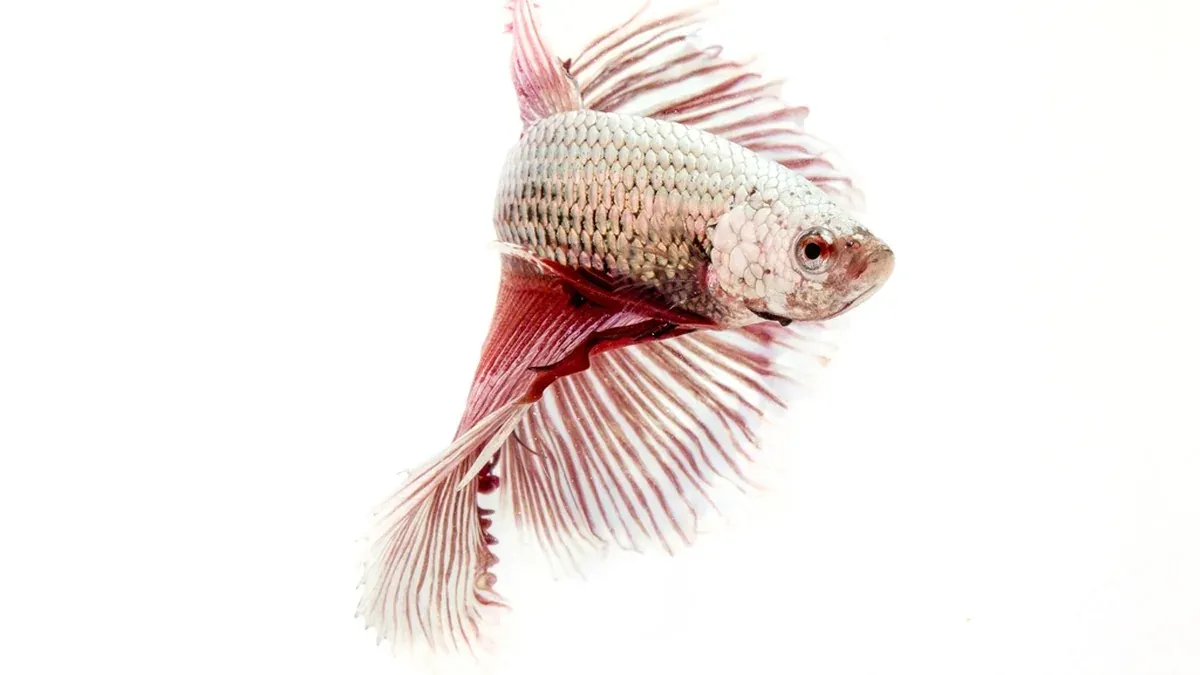
It’s probably harmless when the change is a smooth, even fade across the body (stress or age) or a color that shifts and moves over weeks rather than disappearing (the marble gene). Your betta is still swimming, eating, and alert.
It’s more likely disease when the white is textured — raised dots, fuzzy tufts, or a filmy patch — or when it comes with behavior changes: lethargy, clamped fins, hiding all day, not eating, or rubbing against objects. Watch how your betta acts as closely as you watch its color.
Betta Turning White: Symptom → Cause → First Action
This is the fastest way to triage. Find the row that matches what you actually see, then jump to that section below.
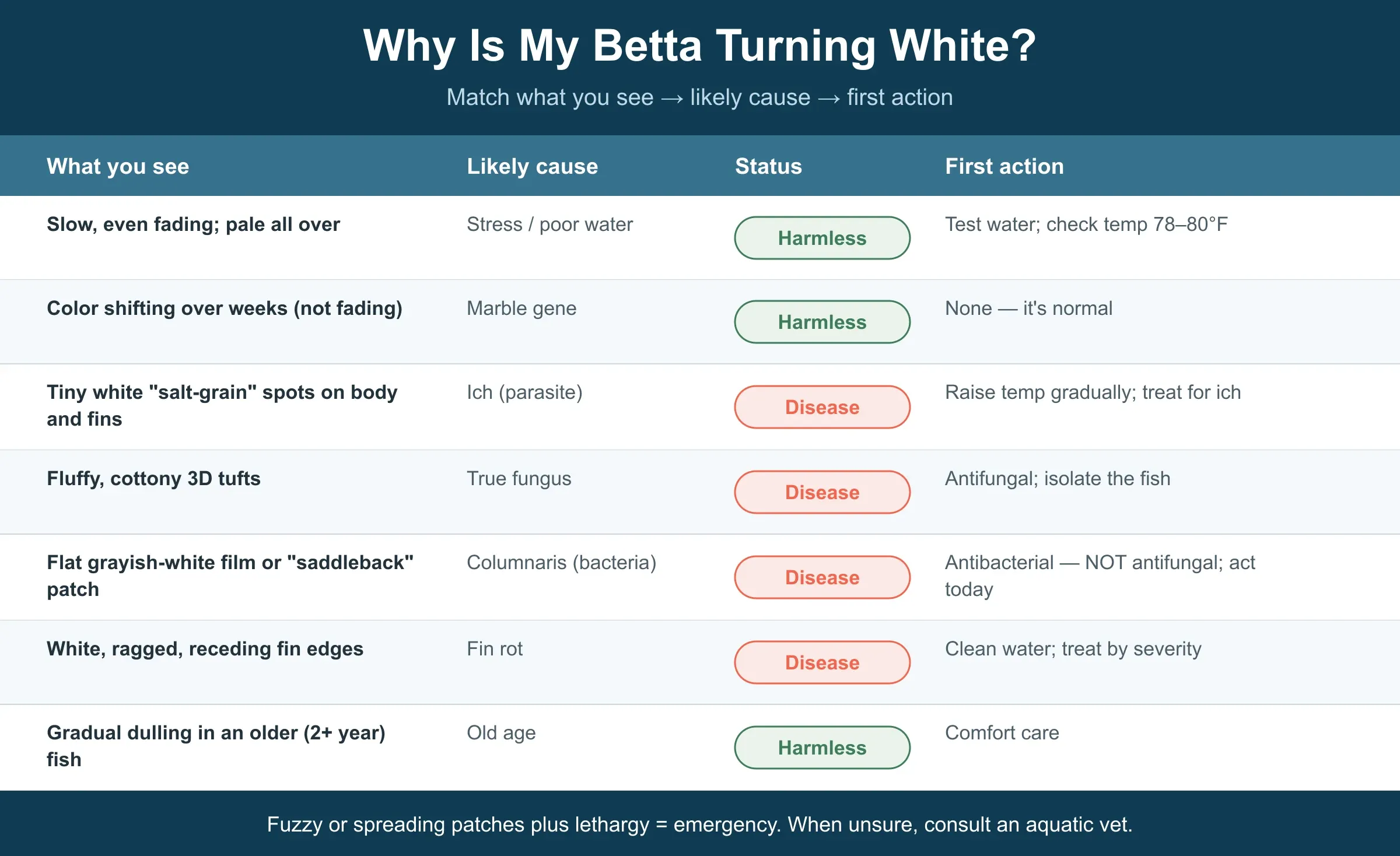
If your fish matches a disease row and is also lethargic or breathing hard, skip ahead to What To Do Right Now and treat it as urgent.
Harmless Reasons Your Betta Is Turning White
Good news first: several of the most common causes aren’t an emergency at all. If the white is an even fade or a shifting pattern and your betta is behaving normally, you’re most likely looking at one of these.
Stress and Fading
This is the single most common reason a betta loses color, and it’s reversible. When a betta is stressed, its color drains — sometimes into a general washed-out paleness, sometimes into dark horizontal “stress stripes.” Common triggers are a brand-new tank, swinging water temperature, an uncycled or undersized tank, aggressive tankmates, or a recent move.
What to do: fix the environment and the color usually returns. Test your water (ammonia and nitrite should read 0 ppm), confirm the temperature sits at a stable 78–80°F, and make sure the tank is at least 5 gallons with somewhere to hide. For a full read on stress signals — clamped fins, glass surfing, hiding — see is my betta happy or stressed.
The Marble Gene (Color Change, Not Color Loss)
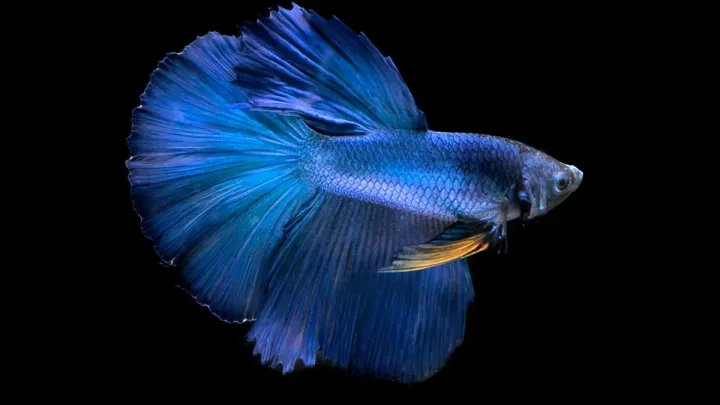
Here’s the reassuring one. Marble bettas carry a gene that makes their color shift throughout their lives. Patches of white (or any color) appear, move, and change over weeks and months — a fish that was solid blue can develop white blotches, then shift again. This is genetic and cosmetic, not a symptom.
The tell that separates marble from disease: marble color changes rather than fades uniformly, the patches have no texture (no fuzz, no dots, nothing raised), and your betta acts completely normal. Many keepers consider a marbling betta one of the most fun fish to own precisely because you never know what it’ll look like next month. Betta splendens is a heavily line-bred species, and color instability is well documented.
Old Age
Bettas typically live around 2–4 years, and many pet-store bettas are already adults when you buy them. As a betta ages, its colors naturally dull and it slows down — that’s a gentle, normal decline, not a disease. There’s no fix, but you can keep a senior fish comfortable with warm, pristine water, stable conditions, and easy-to-eat food.
Poor Diet or Low Light
A betta fed a low-quality, low-variety diet can lose vibrancy over time — this shows up as a general dulling of color, not white patches. Color in fish is partly fueled by pigments (carotenoids) in their food. Feeding a varied, high-protein diet of quality pellets plus the occasional frozen treat like bloodworms or brine shrimp helps keep colors rich. Lighting plays a smaller role, but a betta kept in constant dimness can look washed out compared to one in a well-lit (not glaring) tank.
Disease Reasons — When White Is a Warning
A note before this section
I’m Maya Rivers — a hobbyist and researcher who has kept and studied bettas for years, not a veterinarian. What follows helps you triage and recognize patterns, but it isn’t a diagnosis. Fish diseases overlap in appearance, and the wrong medication can do real harm. If your betta has fuzzy or spreading patches, is breathing hard, or has stopped eating, treat it as urgent and consult a qualified aquatic vet before medicating.
When the white is textured or paired with sickness behavior, you’ve likely crossed from cosmetic into medical. Here are the four diseases that most often turn a betta white.
Ich (White Spot Disease)
Ich is a parasite, and it looks unmistakable once you know it: tiny, discrete white dots, like grains of salt or sugar, sprinkled across the body and fins. You’ll often see your betta flicking or rubbing against decorations and the substrate as it tries to scratch the irritation, and it may clamp its fins or breathe rapidly.
First action: ich is treatable. The standard approach is to raise the temperature gradually (which speeds up the parasite’s life cycle so medication can reach it) and treat with an ich medication, continuing for the full course because the parasite is only vulnerable at certain stages. Keep the water clean throughout. Don’t crank the heat suddenly — raise it slowly over hours, not minutes.
Fungal Infection (Saprolegnia)
True fungus — most commonly Saprolegnia — looks like fluffy, cottony, three-dimensional white tufts. Think of a tiny puff of cotton wool stuck to the fish. It usually takes hold on a wound, a damaged fin, or the mouth, and it tends to appear when a betta is already stressed or injured and the water quality has slipped.
First action: clean up the water immediately, isolate the fish if you can, and treat with an aquarium antifungal. Because fungus often follows an injury or poor conditions, fixing the root cause (water quality, an aggressive tankmate, sharp decor) matters as much as the medication.
Columnaris (“Cotton Wool” / “Cotton Mouth”) — The Dangerous Lookalike
This is the one to get right. Columnaris is caused by a bacterium (Flavobacterium columnare), not a fungus — despite nicknames like “mouth fungus.” It looks like a flat, grayish-white film or patch, sometimes with a faint yellow or brown tint, and it has a classic “saddleback” presentation: a lesion across the back near the dorsal fin. It also attacks the mouth and gills, and it can move alarmingly fast — an untreated case can turn fatal within days.
First action: this is bacterial, so antifungal medication will not work — you need an antibacterial treatment, and you need to act today. Improve water quality immediately and start treatment fast. Because columnaris is aggressive and easy to confuse with fungus, this is the situation where a vet’s input is most valuable. The next section breaks down exactly how to tell the two apart.
Fin Rot
With fin rot, the edges of the fins turn white or translucent, then ragged and frayed, receding over time as if something is eating them away. It’s usually a bacterial or fungal infection that gets a foothold when water quality is poor or a betta is stressed, and it often starts mild and worsens if ignored.
First action: the foundation of treatment is pristine water — many early cases improve with consistent water changes alone. More advanced cases (large chunks of fin gone, the rot reaching the body) need medication matched to severity. Our full guide to betta fin rot walks through identifying the stage and treating each one.
Fungus vs. Columnaris — The Difference That Saves Your Fish
This is the distinction every forum thread argues about and almost no blog explains cleanly. Getting it right matters because antifungal medication does nothing against columnaris, and the days you lose treating the wrong thing are often the days that decide whether the fish lives.
The shortcut to remember: fuzzy and three-dimensional = likely fungus; flat, filmy, and grayish = likely columnaris. When you genuinely can’t tell, assume the faster, deadlier one (columnaris) is possible and get a vet’s eyes on it — because the cost of guessing wrong is high in exactly one direction.
What To Do Right Now (First-Aid Checklist)
Work through these in order before reaching for any medication.
- 1 Test your water
— ammonia and nitrite should read 0 ppm, nitrate ideally under 20 ppm. Bad water causes or worsens nearly every problem on this page.
- 2 Check the temperature
— it should sit at a stable 78–80°F. Cold, swinging water stresses bettas and drains color.
- 3 Do a partial water change
— 25–50% with dechlorinated, temperature-matched water. This is a safe first step that helps in almost every case.
- 4 Watch behavior for 24 hours
— eating, swimming, and alert? Lean toward a harmless cause. Lethargic, clamped, hiding, or rubbing? Lean toward disease.
- 5 Match what you see to the triage table
above, then read that section.
- 6 Escalate if it's textured or spreading
— fuzzy or growing patches, labored breathing, or a fish that’s stopped eating mean it’s time to act fast.
Not-a-vet deferral
If you see spreading fuzzy patches, labored breathing, or your betta stops eating, contact a qualified aquatic veterinarian before medicating. Wrong meds — especially treating columnaris as if it were fungus — can be fatal. Finned Friends helps you triage and rule out the common causes; it isn’t a substitute for veterinary care.
If a loss of appetite is part of the picture, our guide on why your betta isn’t eating covers the other causes worth ruling out.
How to Keep Your Betta’s Color Vibrant
Prevention is mostly just good husbandry — the same conditions that keep color rich also keep disease away:
- A cycled tank of 5 gallons or more, so ammonia and nitrite stay at zero.
- Stable temperature of 78–80°F with a reliable, adjustable heater.
- Weekly partial water changes (around 25–30% for a filtered, cycled tank) with dechlorinated water.
- A varied, high-protein diet — quality pellets plus occasional frozen or freeze-dried treats.
- Low stress — gentle filter flow, hiding spots, and no incompatible tankmates.
Get those right and most “why is my betta turning white” scares never start. For the complete setup, start with our betta fish care guide.
FAQ
Q.Is it normal for a betta fish to turn white?
Sometimes, yes. If it’s an even fade (stress) or a color that shifts around (the marble gene), it’s harmless. It’s not normal if the white is fuzzy, dotted, or filmy, or if it comes with lethargy and loss of appetite — that points to disease.
Q.Why is my betta turning white and lethargic?
Color change plus behavior change usually means disease or bad water, not harmless fading. Test your water and check the temperature first, then use the triage table to match the symptom. Don’t wait this combination out.
Q.Will my betta's color come back?
Often, for the reversible causes — stress, poor water, and diet-related dulling typically improve once you fix the underlying issue. Color changes from the marble gene and from old age are permanent (and the marble one isn’t a problem at all).
Q.What's the white fuzzy stuff on my betta?
Distinct, 3D cottony tufts are usually true fungus. A flat, grayish-white film — especially a saddle-shaped patch on the back or around the mouth — is more likely columnaris, which is bacterial and needs a different (antibacterial) treatment.
Q.Is a white betta automatically a sick betta?
No. Plenty of bettas are naturally white, pastel, or marble. Judge by texture and behavior, not color: a smooth-white, active, eating fish is usually fine; a textured-white, sluggish fish needs attention.
Q.How do I treat a betta that's turning white?
It depends entirely on the cause — clean, warm, stable water fixes stress-related fading, while ich, fungus, columnaris, and fin rot each need different treatment. Identify the cause with the table, fix the water first, and confirm with an aquatic vet before medicating for a suspected disease.
Sources & Further Reading
- Seriously Fish — Betta splendens — natural color, line-breeding, and water parameters.
- CA Fish Vet — Cotton Wool Disease (Columnaris) — clinical overview of columnaris.
Once you’ve ruled out disease and dialed in warm, clean water, most bettas regain their color on their own. For the full picture — tank size, cycling, feeding, and more — start with our complete betta care guide. 🐠