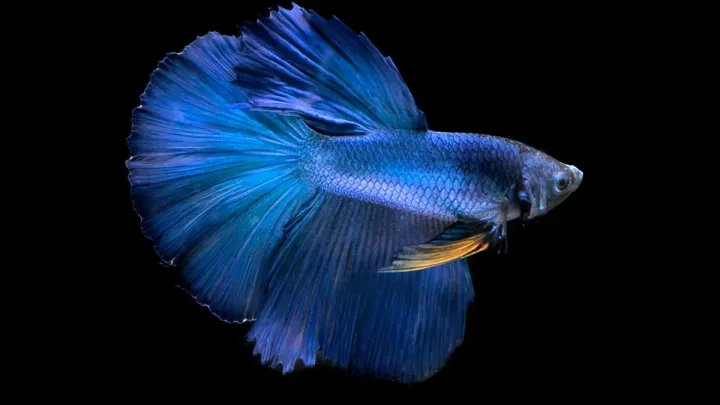
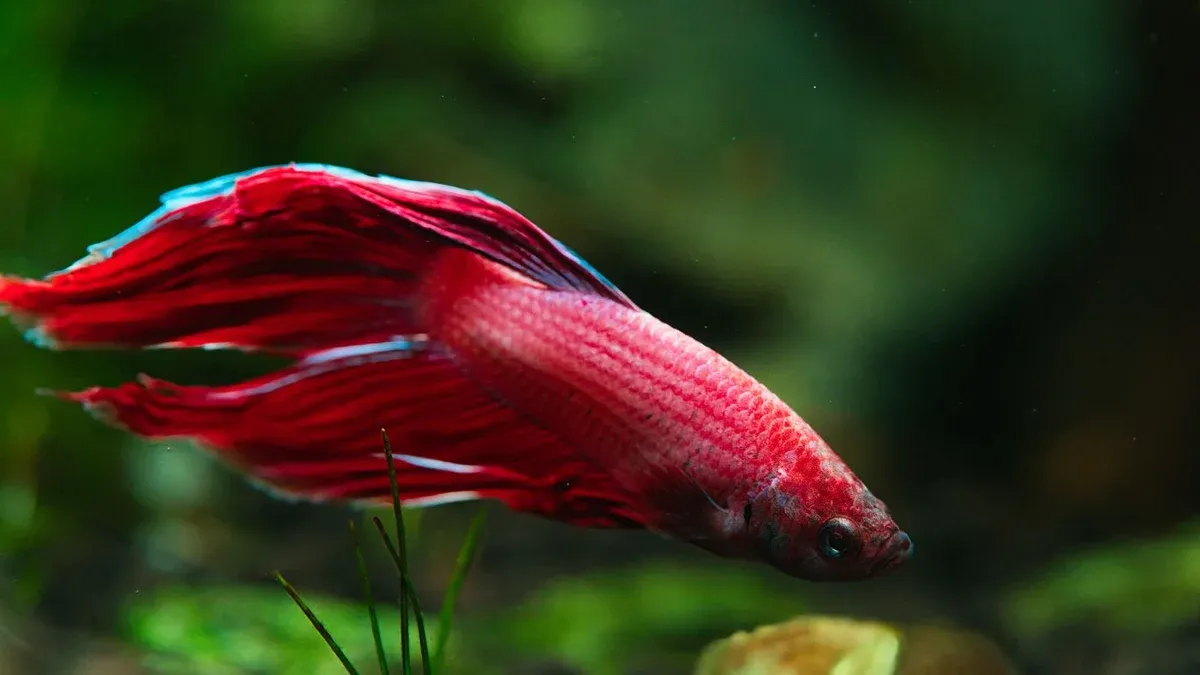

If you’ve ever found your betta lying motionless and feared the worst, it’s one of the most common new-owner scares — and resting is completely normal. The trick is telling a betta that’s peacefully asleep from one that’s actually unwell. Here’s how bettas sleep, the strange positions they pick, the light cycle they need, and a clear table to tell sleeping from sick from dead.
In this guide
Quick Answer: Do Betta Fish Sleep?
Yes — bettas genuinely sleep. Fish don’t sleep exactly the way we do, but they enter a true rest state: they reduce activity and metabolism, settle into a resting posture, and become less responsive while still staying alert enough to react to a threat. For a betta, that usually means going quiet at night, in the dark, often tucked onto a leaf or resting on the bottom.
What throws people off is how it looks. Bettas have no eyelids, so they “sleep” wide-eyed. They also pick odd, sometimes alarming positions — flopped on their side, curled in a corner, or head-down and vertical. Add the fact that their color often fades while they rest, and a perfectly healthy sleeping betta can look like a fish in trouble. It usually isn’t.
- Normal sleep: happens at night/in darkness, fish is still but breathing slowly, color may be a bit dull, and it perks up when light or food appears.
- Worth investigating: stillness during the daytime with the lights on, plus clamped fins, gasping at the surface, or faded color that doesn’t bounce back.
How Do Betta Fish Sleep?
Bettas sleep by powering down rather than by “closing their eyes.” During rest, a fish reduces its activity and metabolic rate and becomes less responsive to the world around it — the same behavioral pattern researchers use to define sleep across most fish species. Their mouth and gill movements slow noticeably because they’re using less oxygen, so you’ll see the gills working gently and slowly rather than briskly.
Two things about betta sleep surprise almost every new owner:
- No eyelids. Bettas can’t shut their eyes, so they sleep with them open. A motionless, open-eyed fish looks startling the first time, but it’s completely normal.
- Color fades. Many bettas lose some color vibrancy while sleeping — likely a natural camouflage instinct so they’re harder to spot at rest. The color returns and deepens once the fish wakes up. (If your betta’s color is permanently dull and dingy, that’s a different issue — see whether your betta is happy or stressed.)
Bettas are mostly active during the day and rest at night, but individuals vary — some nap during the day too, especially if their nighttime sleep gets disturbed by a light left on or noisy tank mates.
Betta Sleeping Positions (the Normal-but-Weird Ones)
Here’s where most owners panic for nothing. Bettas are creative sleepers, and almost none of their favorite positions mean anything is wrong:
- On the substrate or a flat surface — resting on the gravel, a smooth rock, or a decoration is the classic betta nap.
- Lying on one side — flopped over sideways on the bottom or a leaf. Looks dramatic; usually just sleep.
- Curled like a cat — bent into a gentle “C” or “L” shape in a corner.
- Head-down and vertical — nose pointed toward the bottom, tail up. Alarming, often normal at rest.
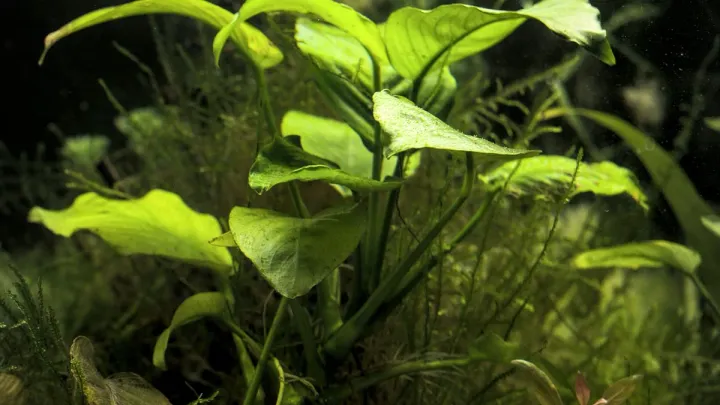
- On a leaf near the surface — bettas love a “leaf hammock” and will perch on a broad plant leaf or a floating leaf to rest near the top where the air is.
- Wedged in odd spots — inside a decoration, a betta log, behind the filter, or in a plant. They like to feel tucked in and secure.
A betta log or a flat-leaf plant (real or a soft silk one — avoid hard plastic that can tear fins) gives your fish a proper place to rest and cuts down on the late-night “is it dead?” scares. The position alone almost never tells you something is wrong. What matters is the context — the time of day, the breathing, and whether the fish responds. That’s exactly what the next table is for.
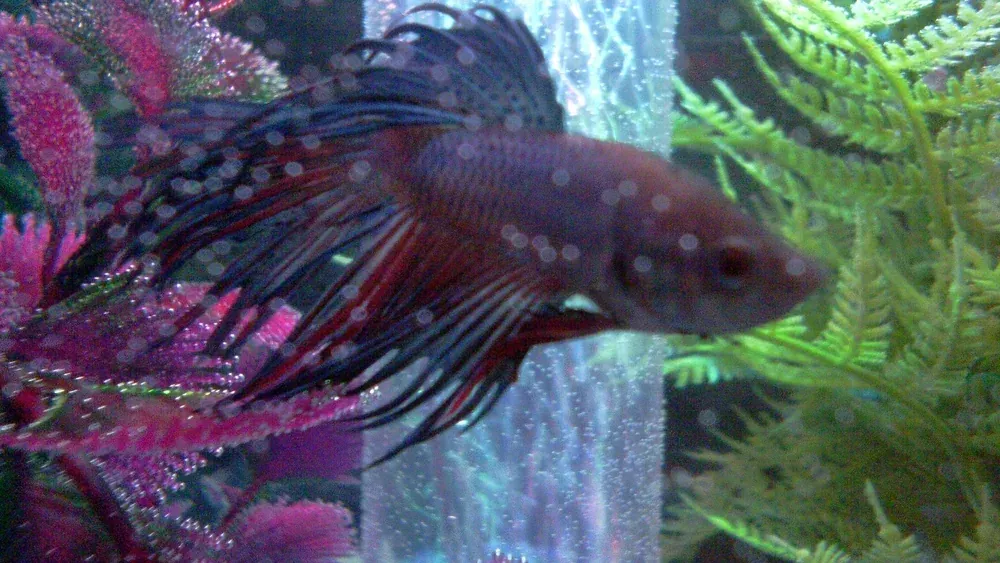
Sleeping vs. Sick vs. Dead: The Quick Check
If your betta is lying still, run through these clues before you do anything drastic. No single sign is proof on its own — read them together, and pay close attention to breathing and time of day.
The single most useful test: gently turn on the light, or drop in a pellet, and watch. A sleeping betta wakes up and reacts — it’ll stir, swim over, or at least flick a fin. A sick betta responds slowly and weakly but still moves. A betta that shows zero response to light, food, and a soft nudge, with no gill movement, has very likely passed.
The Light/Dark Schedule Your Betta Needs
Bettas need a regular day/night rhythm to sleep properly, and the most common mistake is leaving a light on too long — or all the time. Aim for:
- 8–12 hours of light per day, then 12–16 hours of darkness at night. A simple outlet timer on the aquarium light makes this automatic and consistent, which is what your betta actually wants.
- No light at night. Turn the tank light off when you go to bed. Constant light disrupts your betta’s rest the same way a bright bedroom would disrupt yours, and over time that stress can dull color and appetite.
Do bettas need darkness? Yes. Genuine darkness is what cues a betta to rest, so let the tank go properly dark overnight.
Do bettas need a night light? No — skip it. There’s a popular myth that bettas are afraid of the dark and need a “moonlight” LED on overnight. They don’t. A night light keeps the tank too bright and works against the rest your fish is trying to get. Ambient light from the room is plenty; if your room is pitch black, that’s fine too. One caveat: avoid sudden jarring transitions — flipping a bright light on in a dark room can startle a sleeping betta, so let some room light in first, or use a timer that matches your home’s natural light.
When Stillness Is a Problem (Not Sleep)
Here’s the line that separates normal rest from a warning sign: a betta resting at night is fine; a betta lying still and lethargic during the day, with the lights on, usually is not.
Daytime stillness is far more likely to be a problem than nighttime rest. The most common culprits:
- Cold water. Bettas are tropical fish. Below about 76°F their metabolism slows and they go sluggish and listless. Check that the heater is keeping a stable 78–80°F — this is the number-one cause of a daytime-lethargic betta.
- Poor water quality. Ammonia or nitrite building up in an uncycled or dirty tank stresses a betta into lying low. Both should test at 0 ppm.
- Illness. Lethargy paired with clamped fins, gasping, faded color, bloating, or scales sticking out like a pinecone points to a health problem, not a nap.
If your betta is still and unresponsive during the day with any of those red flags — clamped fins, gasping at the surface, or color loss that doesn’t recover — that is not sleep. Check the water temperature and test the water first, since fixing those resolves most cases. For a full walk-through, see why your betta is laying at the bottom in our guide on a betta laying at the bottom. If conditions are correct and the symptoms persist, it’s time to consult an aquatic vet.
A note from the author
I’m a hobbyist and researcher, not a veterinarian — Finned Friends can help you rule out the common, fixable causes, but a fish that’s clearly sick needs a professional. Guessing with medications often does more harm than good.
FAQ
Q.Is my betta sleeping or dead?
Watch the gills and mouth — a sleeping betta still breathes, slowly and gently. Then turn on the light or drop in a pellet: a sleeping fish wakes and reacts within a minute or two, a sick one responds weakly but still moves, and a betta showing no breathing and no response to light, food, or a soft nudge has most likely died. Use the table above to weigh the clues together rather than relying on position alone.
Q.Why is my betta sleeping at the bottom of the tank?
Resting on the substrate is a normal, favorite betta sleeping spot, especially at night. It’s only a concern if it happens for long stretches during the day alongside clamped fins, gasping, or faded color — which usually points to cold water or poor water quality rather than sleep.
Q.Do betta fish sleep with their eyes open?
Yes. Bettas have no eyelids, so they can’t close their eyes — they always sleep wide-eyed. A motionless, open-eyed betta is normal as long as it’s breathing slowly and wakes when disturbed.
Q.How long do betta fish sleep?
There’s no exact number, but bettas generally rest through the dark hours of the night and may also take short naps during the day. Giving them 8–12 hours of light and 12–16 hours of darkness lets them settle into a healthy, consistent rhythm.
Q.Do betta fish need darkness to sleep?
Yes. Darkness is the main cue that tells a betta to rest, so turn the tank light off at night. Skip the night light — bettas don’t need one, and constant light interferes with their sleep.
Q.Why does my betta sleep during the day?
An occasional daytime nap is normal, but frequent daytime sleeping often means the betta’s nighttime rest is being disrupted (a light left on, noisy tank mates) — or that something’s off, like cold water or stress. Check the temperature and lighting schedule first.
Sources & Further Reading
- NOAA — Do fish sleep? — most fish rest by reducing activity and metabolism while staying alert to danger.
A betta that sleeps well is usually a betta that’s cared for well — stable warmth, clean water, a dark night, and a comfy leaf to rest on. For the full picture, start with our complete betta care guide. 🐠