That last sentence is the one most guides skip. Roughly half the “fin rot” panics I see turn out to be a betta chewing its own tail or catching a fin on sharp decor, and treating either of those with medication does nothing but stress an already stressed fish. So before you dose anything, spend two minutes on the differential below. Once you know it really is rot, the rest is mostly patience, clean water, and knowing what healing looks like.
In this guide
Is It Actually Fin Rot? The Differential
Ragged fins have four common explanations, and they call for four different responses. Fin rot is an infection you treat. Fin biting is a behaviour problem you solve by reducing stress. Decor tearing is a physical injury you prevent by removing the hazard. Columnaris is a fast, dangerous bacterial disease that needs urgent action. Match what you actually see to the table before you reach for a bottle.
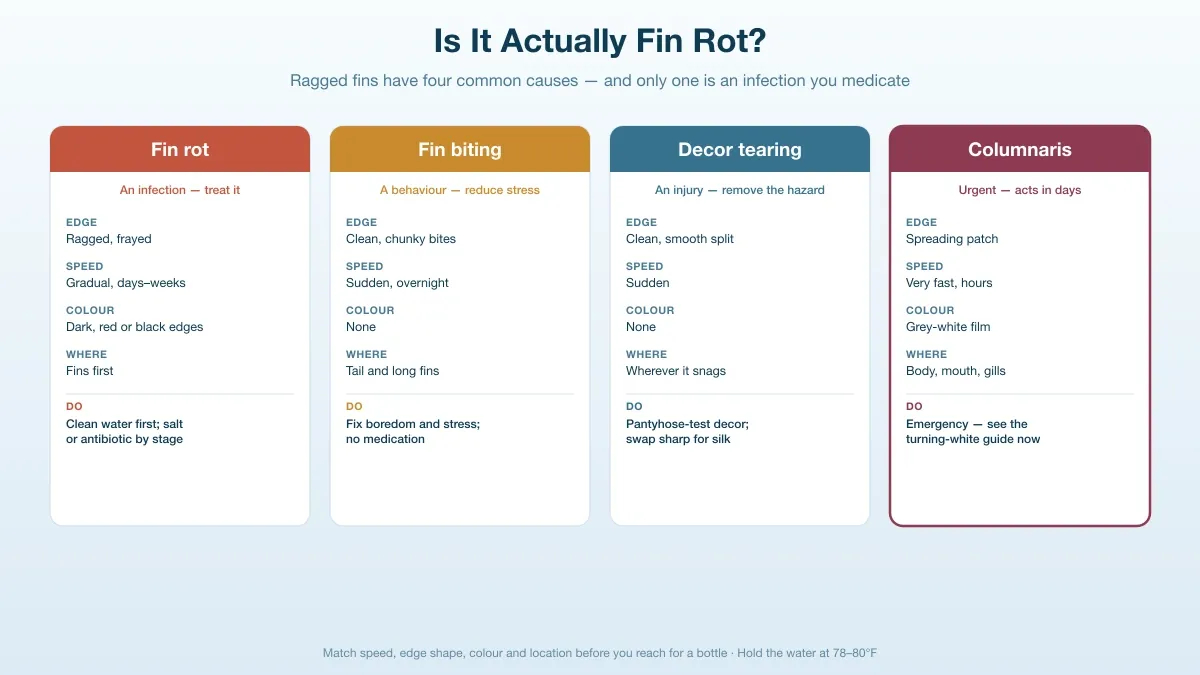
Fin biting is the confusable that fools the most people. A betta that is bored, stressed, or annoyed by its own heavy fins will turn and bite them, leaving clean bites that show up overnight with no discolouration at all. The giveaway is speed plus a clean edge: rot creeps and darkens, biting takes a visible chunk in one go. Long-finned types like halfmoons and dumbos are the usual culprits. If you suspect biting, look at stress and boredom first. A tank that is too small, too bright, too bare, or too warm all encourage it. Our guide on whether your betta is happy or stressed walks through reading those signs.
Decor tearing leaves a smooth, clean split, usually traceable to one sharp object your betta keeps swimming past. Plastic plants, rough ornaments, and jagged driftwood are common offenders. The pantyhose test settles it: drag a pair of tights across the decor, and if the fabric snags, so will your betta’s fins. Swap the item for silk plants or smoothed hardscape, and the tears simply stop appearing. The betta tank setup guide covers fin-safe decor in more detail.
Columnaris is the one dangerous lookalike here, and it shows on the body, not the fin edges, and can kill within days. I won’t re-explain it: our guide on why a betta turns white already lays it out beside fungus and ich. If the white is on the body, go there now and treat it as urgent.
What Fin Rot Looks Like — the Three Stages
Real fin rot progresses in stages, and knowing which one you are looking at decides how hard you treat.
Mild. The outer edges of the fins look slightly frayed, ragged, or transparent, sometimes with a faint darkening at the very rim. It is subtle and easy to miss — many keepers only notice once they compare against an old photo. Behaviour is normal; the fish still eats and swims. Caught here, fin rot is very manageable.
Moderate. The fins are visibly shorter, torn, or holed, and the edges take on red, brown, or black colouring as the infection eats inward. You may see a whitish fuzz or fringe along the retreating line. The rot is now marching toward the fin base rather than nibbling the tips. This stage needs active treatment, not just a wait-and-see.
Severe (body rot). The fin is destroyed down to the base, and the infection has reached the body itself. Open sores or ulcers can appear where fin meets flesh, sometimes with bloody streaks, and the fish often turns lethargic and stops eating as the illness becomes systemic. This is a medical emergency and the point at which an aquatic vet and antibiotics come into the picture. Bettas can recover from severe rot, but the odds drop sharply once it reaches the body.
What Causes Fin Rot
Fin rot bacteria are present in almost every tank all the time. They only take hold when a betta’s immune defences are down, and the number-one reason for that is water quality. Ammonia or nitrite reading above 0 ppm, nitrate climbing past roughly 20 ppm, an uncycled or overdue tank, or water that runs too cold all weaken the fish and hand the bacteria an opening. This is why the fix so often starts with a bucket rather than a bottle of medicine. Our betta water changes guide covers the schedule and method that keep those numbers where they belong.
Two other doorways matter. A physical injury, such as a fin torn on decor or nipped by a tank mate, gives bacteria a raw edge to colonise, which is exactly why decor tearing and fin rot sometimes arrive together. And chronic stress from an undersized tank, a bullying tank mate, or swinging temperature suppresses the immune system the same way bad water does. Fix the environment and you remove most of the cause.
How to Treat Fin Rot by Stage
Treatment scales with severity. The table maps each stage to its own first move, and the numbered protocol underneath it is the clean-water foundation that every stage shares.
For the clean-water foundation that underpins every stage, work through these in order:
- 1 Test the water
Ammonia and nitrite at 0 ppm, nitrate low. If any of those is off, you have found your cause. This step comes first no matter the stage.
- 2 Do a partial water change
Use dechlorinated, temperature-matched water. For active rot, keeping the water exceptionally clean with more frequent partial changes is the single most effective thing you can do.
- 3 Check and hold the temperature
A stable 78–80°F supports a betta’s immune response and recovery. Cold, swinging water works against you.
- 4 Remove the hazard and reduce stress
Take out sharp decor, ease any tank-mate conflict, and give the fish quiet, gentle flow while it heals.
- 5 Escalate only if it isn't responding
If a mild case hasn’t stabilised on clean water, or a moderate case keeps advancing, move to the aquarium-salt method or, for severe cases, a vet and antibiotics.
A Word on Aquarium Salt and Medications
This is the part of fin rot advice where the internet contradicts itself the loudest, so I’ll be plain about what is settled and what is not. I’m Maya Rivers, a hobbyist and researcher, not a veterinarian, and none of the figures below are a prescription.
Aquarium salt. Aquarium salt (sodium chloride made for tanks, not table salt and not Epsom salt) is the most commonly cited home aid for moderate fin rot. The method keepers describe most often is around 1 teaspoon per gallon, dissolved fully in a cup of tank water before it goes anywhere near the fish. One detail causes a lot of accidental overdoses: salt does not evaporate or leave with clean water the way a liquid medication does, so you only re-dose for the portion of water you actually removed in a change — never top the full dose back up over the old one. Keepers also cap salt treatment at roughly 10 days, since prolonged exposure can stress a betta’s kidneys and liver. Treat all of that as commonly-cited hobbyist practice rather than veterinary dosing. If you want a dose matched to your specific fish and tank, an aquatic vet is the right person to ask.
Melafix and Bettafix. Big-brand retail pages, including the products’ own maker, present Bettafix and Melafix as first-line antibacterial remedies for fin rot, and you will see them recommended freely at pet stores. The experienced betta community is much more wary, and I side with the cautious view here. These products are built on a tea-tree-family plant oil (cajeput), which is not a true antibiotic, and keepers on long-running betta forums widely report that the oil can film over a betta’s labyrinth organ (the accessory lung a betta uses to gulp air at the surface) and interfere with its breathing. The evidence for that harm is largely anecdotal rather than from controlled studies, and the manufacturer disputes it, but given that these remedies are weak against real bacterial rot in the first place, I don’t recommend leaning on them as a cure. Clean water does more, and for a case bad enough to need medicine, a proper antibacterial does more still.
Indian almond leaf (catappa). Dropping an Indian almond leaf or a little of its extract into the tank releases tannins that gently tint the water and are widely valued as mild, soothing support during recovery. Think of it as a comfort measure that helps conditions, not a treatment that clears the infection on its own.
Antibiotics for severe rot. When rot reaches the body, aquarists report reaching for antibacterial medications, and the names that come up most are erythromycin, kanamycin, and tetracycline. There is no single agreed protocol across sources, the right choice depends on the specific infection, and dosing the wrong one wastes days a severely ill fish may not have. I’m not going to print doses for that reason. Name these to your aquatic vet and let a professional direct the treatment.
Is It Healing? The Regrowth Checklist
Here is the reassuring part: betta fins do grow back, and the sign of healing is unmistakable once you know it. New growth comes in clear or transparent first, a delicate, almost cling-film-like membrane extending from the healed edge. That clear fringe means the rot has stopped and regrowth has begun. Over the following weeks the new tissue thickens and slowly takes on colour, though it may come back a slightly different shade, and faint ripples or a slightly uneven edge are just scar tissue rather than a relapse.
Betta fins usually grow back within a month or two for moderate damage, though severe loss can take longer and occasionally never fully recovers. The pace is slow and a little uneven, which is normal. If weeks pass with clean, warm water and you see no clear new edge at all, that is your signal to escalate rather than keep waiting.
How to Prevent It Coming Back
Prevention is the same short list that prevents most betta illness, because a healthy immune system is what keeps ever-present bacteria in check.
- Keep the tank cycled and the water clean. Zero ammonia, zero nitrite, nitrate under about 20 ppm, with regular partial water changes.
- Hold a stable 78–80°F. A reliable adjustable heater and a thermometer, not the heater’s dial alone.
- Give it room. Five gallons or more, gently filtered, so waste and temperature stay stable. See the betta tank setup guide.
- Use fin-safe decor. Silk plants over stiff plastic, and the pantyhose test on anything sharp.
- Keep stress low. No fin-nipping tank mates, no overcrowding, and hiding spots so the fish feels secure.
Get those right and recurring rot becomes rare. Fin rot is far more a symptom of the tank than a disease of the fish itself.
When to Get Help
See an aquatic veterinarian if
- The rot has reached the body, not just the fins.
- Ulcers or open sores appear, or you see bloody streaks in the fin or flesh.
- Your betta goes lethargic, clamped, or stops eating.
- The damage is spreading despite clean, warm water — which can point to columnaris rather than ordinary fin rot.
- You are considering antibiotics and want the right one chosen and dosed properly.
Finned Friends can help you tell rot from biting and decor damage, and walk you through the clean-water basics that resolve most mild cases. We don’t diagnose disease, and Maya Rivers is a hobbyist and researcher, not a veterinarian — once the infection reaches the body or refuses to respond, a professional is the right call.
FAQ
Q.Is it fin rot or fin biting?
Look at how fast it appeared and whether the colour changed. Fin rot creeps in over days to weeks, recedes fairly evenly, and darkens or reddens at the edges, sometimes with a fuzzy fringe. Fin biting takes a clean chunk out — often a U-shaped notch in the tail — usually overnight, with no discolouration at all. Long-finned bettas bite most, and it traces back to boredom or stress rather than infection, so no medication is needed.
Q.Can fin rot heal with just clean water?
Often, yes, when it’s mild. Because fin rot takes hold on the back of poor water quality, correcting the water frequently removes the cause and lets the fish heal itself. Test your parameters, ramp up partial water changes with dechlorinated, temperature-matched water, and hold a stable 78–80°F. Many early cases stop receding and begin regrowing on that alone, no medication required. If a mild case keeps advancing despite genuinely clean water, that’s your cue to step up treatment.
Q.How much aquarium salt, and for how long?
The commonly cited hobbyist method is about 1 teaspoon of aquarium salt per gallon, dissolved fully in a cup of tank water before adding it, for moderate cases. Because salt doesn’t leave with evaporation, you only re-dose for the water you physically remove during a change, never the whole dose again. Keepers cap it around 10 days, since longer exposure can stress the kidneys and liver. Treat these as commonly-cited figures rather than veterinary dosing, and ask an aquatic vet for a dose matched to your fish.
Q.Is Melafix or Bettafix safe for bettas?
It’s contested, and I lean cautious. Big retail and the maker market Bettafix and Melafix as fin-rot remedies, but they’re built on a tea-tree-family plant oil (cajeput) rather than a true antibiotic, and the experienced betta community widely reports the oil can film over the labyrinth organ a betta uses to breathe air. That harm is mostly anecdotal and the manufacturer disputes it, but since these products are also weak against real bacterial rot, I don’t recommend relying on them as a cure. Clean water and, when needed, a proper antibacterial do more.
Q.Do betta fins grow back, and how long does it take?
Usually, yes. Moderate fin loss typically regrows within a month or two once the infection is stopped and conditions are good, healing at roughly the pace of a growing fingernail. New growth arrives clear and transparent first, then thickens and slowly regains colour — sometimes a slightly different shade. Severe damage that reached the body takes longer and occasionally doesn’t fully return. Progress is normal to see as uneven, so judge it over weeks, not days.
Q.How do I know it's healing?
Watch the fin edge. The clearest sign is a thin, transparent, almost cling-film-like membrane growing outward from the healed line — that clear fringe means the rot has stopped and regrowth has started. You want the recession to halt, the dark or bloody edges to fade, and that clear growth to hold and extend week over week. Faint ripples in the new tissue are just scar tissue. If new growth keeps appearing then receding with no net gain, treatment isn’t working yet.
Q.Can fin rot turn into body rot or columnaris?
Untreated fin rot can advance into the body. That is the severe stage, with ulcers, bloody streaks, and a lethargic fish, and it needs a vet and antibiotics. Columnaris is a separate, faster bacterial disease rather than a later stage of fin rot: it shows as grey-white cottony patches on the body, mouth, and gills, and can be fatal within days. If damage spreads on the body despite clean water, treat it as possible columnaris and see our betta turning white guide, which compares it directly with fungus.
Q.What temperature helps recovery?
A stable 78–80°F throughout treatment. That range supports a betta’s immune system and metabolism, which is exactly what it needs to fight the infection and rebuild fin tissue. Cold water slows healing and adds stress, and swinging temperature is worse still, so a reliable adjustable heater plus a thermometer matters more than nudging the number higher. Don’t crank the heat to “cook” fin rot the way some people do for ich — steady warmth in the normal band is what you’re after.
Helpful sources: For the staged symptom descriptions and the clean-water-plus-salt approach, see Bettafish.org’s fin rot guide. For when a case has moved past home care and needs professional treatment, an aquatic-veterinary reference such as Aquatic Veterinary Services, the fish-only practice of Dr. Jessie Sanders (DABVP, Fish Practice), is a sensible next stop. On the medication debate, the caution around tea-tree-oil remedies and the labyrinth organ is drawn from long-running betta-keeping community discussion rather than controlled studies, and is presented here as exactly that.
Rot spreads on dirty water and heals on clean water — so before you medicate, make sure it’s really rot, then fix the tank first. For everything else your betta needs, start with our complete betta fish care guide. 🐠
Finned Friends publishes researched, plain-English aquarium guides. Maya Rivers is a hobbyist and researcher, not a veterinarian; our content is informational and not a substitute for veterinary care — see our Disclaimer and Editorial Standards.