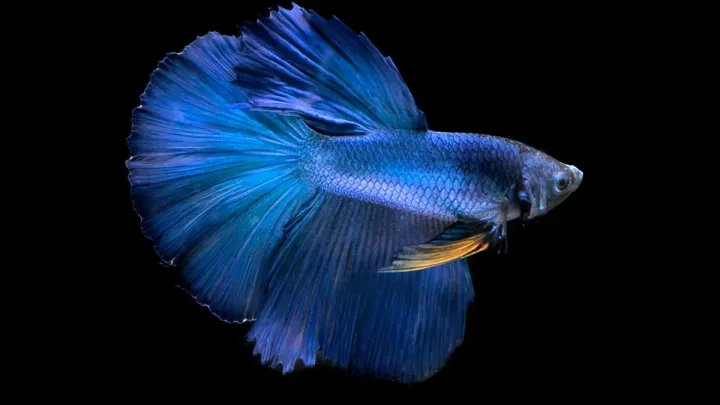
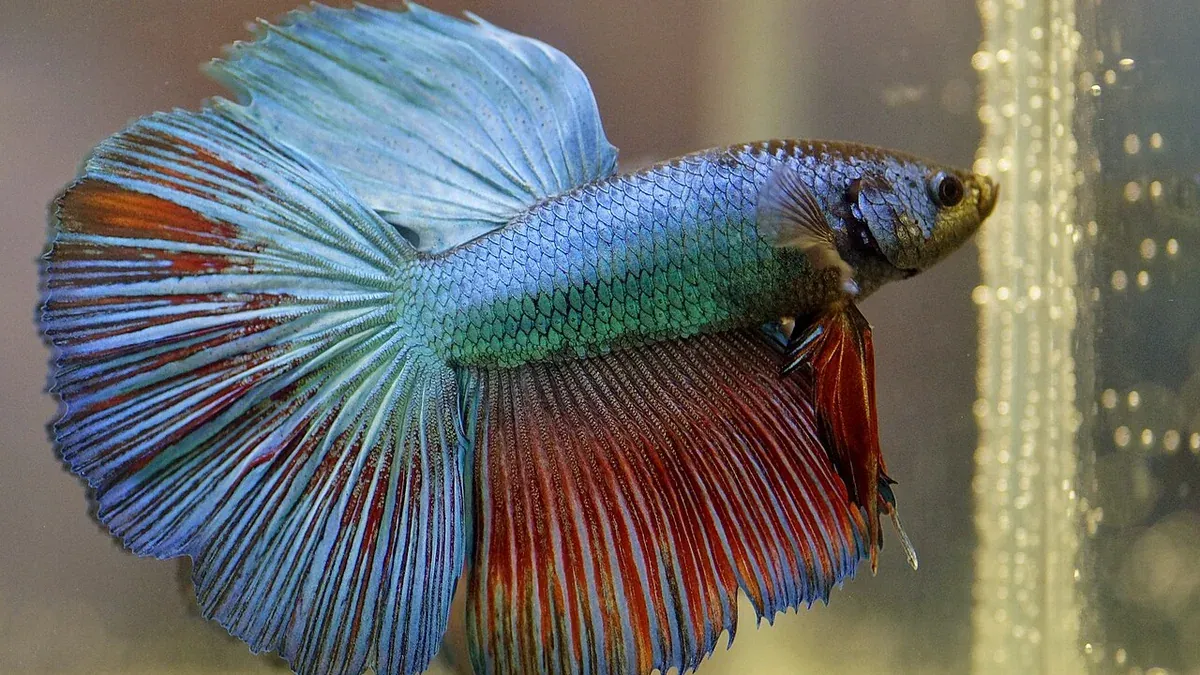
Walk into any pet store and the betta aisle is a wall of tubs, flakes, and freeze-dried cubes, all promising to be “complete.” Most “best betta food” guides just hand you a top-10 list and leave you to guess. This one does the opposite: a clear framework, a side-by-side comparison of every food type, and how to read a label so you can pick a good food on your own.
In this guide
Quick Answer: What to Feed and Why
Bettas are carnivores — in the wild, Betta splendens preys mainly on insects, insect larvae, and small crustaceans (Seriously Fish). That single fact drives every feeding decision: your betta needs animal protein, not plant filler.
A reliable diet looks like this:
- Staple (every day): a high-quality betta pellet with a named whole protein listed first.
- Treats (2–3 times a week): frozen or live bloodworms, brine shrimp, or daphnia, swapped in place of a pellet meal for enrichment and color.
- One fasting day a week: no food, to let the digestive system clear and prevent bloating.
That’s the whole system. The rest of this guide explains why each piece works and how to choose well within it.
The 4 Betta Food Types, Compared
There are four formats you’ll actually use: staple pellets, freeze-dried, frozen, and live. Each has a different job. Pellets are the convenient nutritional base; the other three are protein-rich treats that bring variety. Here’s how they stack up.
The takeaway from the table: no single format wins on everything. Pellets win on convenience and consistency, which is exactly why they make the best daily base. Frozen and live win on nutrition and enrichment, which is why they make the best treats. Combining them is how you get both.
The Feeding Framework: Staple + Rotation
If you remember one thing, make it this: one good staple pellet, plus a rotating treat.
1. Pick a high-protein pellet as your base. This is what your betta eats most days. A betta-specific pellet is formulated to be nutritionally complete, so it covers the basics without you having to think about it. Feed it as the default and you’ll never have a malnourished fish.
2. Rotate in frozen or live treats two to three times a week. Instead of pellets that day, offer a small amount of thawed frozen bloodworms, brine shrimp, or daphnia. This does three things: it mirrors the betta’s natural insect-and-crustacean diet, it keeps a picky fish interested, and the natural carotenoid pigments in foods like brine shrimp and daphnia help support a betta’s red and orange coloration. Seriously Fish specifically recommends regular small live or frozen foods “to ensure development of optimal colour and condition.”
3. Keep one day a week food-free. A weekly fasting day lets your betta’s digestive system clear and is one of the simplest ways to prevent the bloating and constipation that overfeeding causes.
That’s it. You don’t need ten products. A tub of quality pellets and one bag of frozen treats in the freezer will feed a betta well for months.
How to Read a Betta Food Label
The label is where good food separates from filler. You don’t need to be a nutritionist — just check three things.
1. Look at the first ingredient. Ingredients are listed by weight, so the first one is what the food is mostly made of. For a carnivore like a betta, you want a named whole animal protein first — something like whole fish, whole salmon, whole krill, or black soldier fly larvae. Vague terms like “fish meal” are acceptable but less ideal; a named whole source is better.
2. Avoid filler-heavy foods. If the first ingredient (or several of the top few) is wheat, corn, soy, or “cereal,” put it back. Bettas can’t efficiently digest large amounts of plant filler — it offers little nutrition and is a common cause of bloating and digestive trouble. This is also why most general “tropical flake” food is a poor staple for bettas: flakes are often filler-heavy and built for omnivorous community fish, not carnivores.
3. Check the crude protein. Higher is generally better for this carnivorous fish. As a rule of thumb, a solid betta pellet sits in roughly the 40%+ crude-protein range. Treat this as a quick sanity check alongside the ingredient list, not the only number that matters.
A quick mental test: “Is the first thing on this list an animal, or a plant?” For a betta, you want the animal.
How Much and How Often to Feed
Overfeeding is the single most common betta-care mistake, and the fix is simple once you know the right portion.
Portion size: A betta needs very little food — the rule of thumb aquatic vets use is a portion no bigger than the fish’s eye. In practice, that means roughly 2 to 4 pellets per meal for an average adult betta. It looks like almost nothing, and that’s correct.
Frequency: Feed once or twice a day. Twice-daily small meals work well; a single slightly larger meal is also fine. Either way, keep each meal to that eye-sized portion.
The two-minute rule: Whatever you offer, your betta should finish it within about two minutes. If food is sinking past your betta and sitting on the substrate uneaten, you’re giving too much. Remove leftovers so they don’t foul the water.
One fasting day a week: Skip food entirely one day each week. A healthy adult betta handles this easily, and it helps keep digestion regular.
For a deeper schedule — including fry, juveniles, and vacation feeding — see our full guide on how often to feed a betta fish, or get a personalized weekly plan from our free betta feeding calculator.
A Note on Food and Illness (and When to See a Vet)
Diet and digestion are linked, so a couple of food-related issues come up a lot.
Constipation and bloating usually trace back to overfeeding, too much dry/freeze-dried food, or no fasting days. A swollen-bellied betta that isn’t pooping is often constipated. The standard first response is to fast the fish for a day or two, then resume with smaller portions and consider a tiny piece of thawed, deshelled pea as a one-off — though pellets-and-fasting is the more reliable routine. If your betta suddenly refuses to eat, that can also signal water or temperature problems — our guide on why a betta won’t eat walks through the causes.
See a vet when in doubt
A quick, honest disclaimer: I’m a hobbyist and researcher, not a veterinarian. Finned Friends can help you understand the common causes and good husbandry, but feeding tweaks aren’t a treatment for serious illness. If your betta has a badly swollen belly, scales sticking out like a pinecone, is straining, or stays bloated and lethargic despite fasting, consult an aquatic veterinarian rather than guessing. For more on the mild, food-related case, see betta constipation.
Foods to Skip
A few things commonly sold or suggested that aren’t great staples:
- Generic tropical flakes — usually filler-heavy and built for omnivores, not a carnivorous betta.
- Goldfish or community-fish food — wrong nutritional profile; too much plant matter.
- Human food and bread — bettas can’t digest it; it just fouls the water.
- Freeze-dried as the only food — fine as a treat, but its dryness makes it a poor everyday base.
None of these will instantly harm a betta as an occasional accident, but as a daily diet they lead to a duller, less healthy fish over time.
FAQ
Q.Are pellets or frozen food better for bettas?
They’re better at different jobs. Pellets are the better staple — convenient, consistent, and nutritionally complete. Frozen foods are the better treat — closer to a betta’s natural diet and richer in usable protein. The strongest diet uses pellets as the daily base and frozen (or live) foods a few times a week, rather than choosing one.
Q.Can a betta live on pellets alone?
Yes, a high-quality betta pellet is formulated to be complete, so a betta can survive on pellets alone. But adding frozen or live treats a few times a week improves variety, color, and feeding enthusiasm, and more closely matches what bettas evolved to eat. Think of pellets as the floor, not the ceiling.
Q.What is the best first ingredient in betta food?
A named whole animal protein — for example whole fish, whole salmon, whole krill, or black soldier fly larvae. Because ingredients are listed by weight, a named animal protein first tells you the food is genuinely protein-forward, which is what a carnivorous betta needs. Avoid foods led by wheat, corn, or soy.
Q.Do bloodworms make good betta food?
Bloodworms are an excellent betta treat — they’re high in protein and bettas love them. They work best frozen or live; freeze-dried bloodworms are convenient but dry, so soak them first to reduce the risk of constipation. Use them as part of a rotation, not as the entire diet, since they’re not nutritionally complete on their own.
Q.How do I know if I'm overfeeding my betta?
Watch the portion and the leftovers. If you’re giving more than about 2–4 pellets per meal, if food regularly sinks uneaten to the bottom, or if your betta’s belly looks swollen, you’re overfeeding. Drop to an eye-sized portion, remove uneaten food, and keep a weekly fasting day.
Q.Does betta food affect color?
It can. Foods containing natural carotenoids — pigments found in brine shrimp, daphnia, and many quality pellets — support and enhance a betta’s red and orange tones. A varied, protein-rich diet generally produces better color and condition than a filler-heavy one, which is one reason rotating in frozen or live treats is worthwhile.
Sources & Further Reading
- Seriously Fish — Betta splendens — species profile and natural diet.
- Practical Fishkeeping — How to feed your new betta — reputable UK fishkeeping source.
Get the staple right, rotate a couple of treats, and keep portions eye-sized — that’s most of betta nutrition handled. Pair it with the right feeding schedule, and for everything else start with our complete betta care guide. 🐠