
If your betta has suddenly vanished behind the filter or won’t leave its cave, it’s natural to worry something’s wrong. The good news is that hiding is often completely normal — but it can also be the first sign your tank needs attention. This guide helps you tell the difference, then gives you a fix for each cause.
In this guide
- 01 Quick Answer: Is My Betta’s Hiding Normal or a Problem?
- 02 Normal (Harmless) Hiding vs. Concerning Hiding
- 03 The Single Best First Check: Water and Temperature
- 04 Causes of Betta Hiding → and How to Fix Each One
- 05 How to Coax a Shy Betta Out of Hiding
- 06 When Hiding Signals Illness
- 07 FAQ
- 08 Sources & Further Reading
Quick Answer: Is My Betta’s Hiding Normal or a Problem?
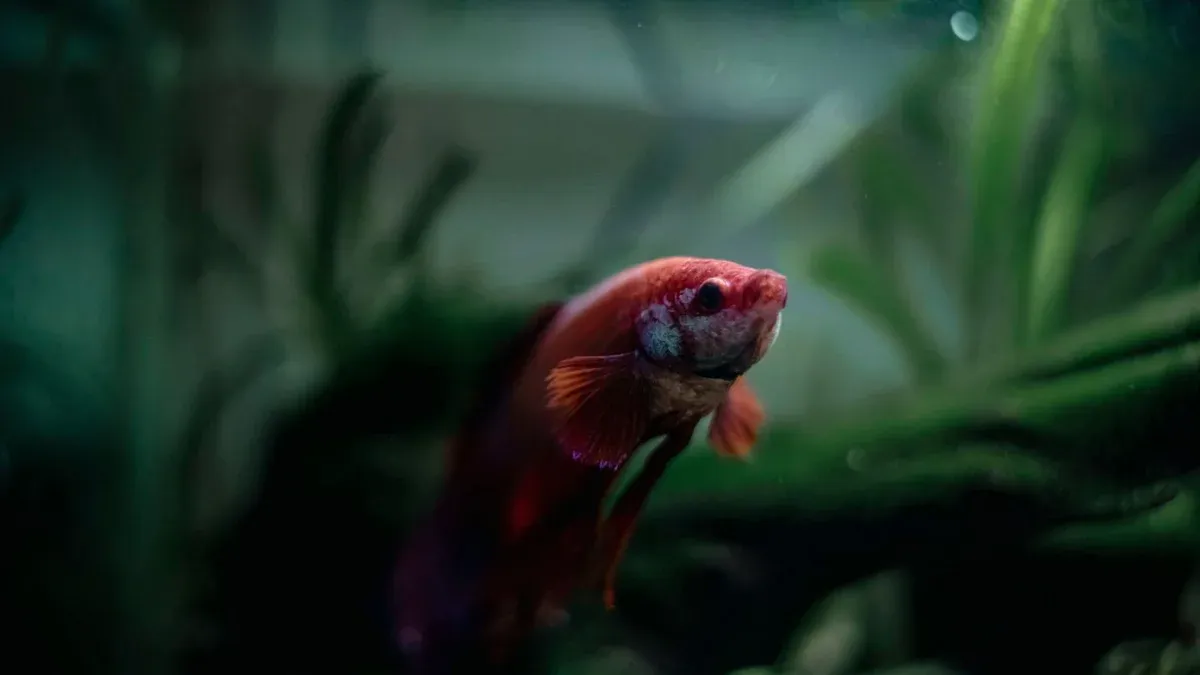
Bettas are not the bold, out-in-the-open fish people expect. In the wild they live in shallow, plant-choked water — marshes, floodplains, and rice paddies — where resting in cover is normal, safe behavior (Wikipedia). So a betta that ducks into plants or a cave isn’t automatically unwell.
The useful question isn’t “is it hiding?” — it’s “did anything change, and how does the fish look otherwise?” A betta that’s eating, swimming normally, and brightly colored but likes its hideout is fine. A betta that suddenly started hiding and looks off is worth investigating.
- Probably normal if the tank is new, your betta has always been shy, it’s nighttime or resting, or it simply has lots of plants and caves it enjoys — and it still eats and looks healthy.
- Worth investigating if the hiding is sudden, your betta won’t come out even for food, or it comes with clamped fins, faded color, white spots, lethargy, or a swollen belly.
Normal (Harmless) Hiding vs. Concerning Hiding
Here’s the at-a-glance split. If everything about your betta lands in the left column, you can relax and give it time. Anything in the right column means run the checks further down.
A quick word on new bettas
If you brought your betta home in the last week or two, hiding is one of the most common things new owners panic about — and it almost always resolves on its own. Moving is stressful, and a new tank, new water, and bright lights all push a betta to lie low until it feels safe. This is normal. Give it time, keep the tank calm, and let it explore on its own schedule.
That said, “give it time” doesn’t mean “ignore the water.” A new tank is also the situation most likely to have unstable, un-cycled water — so even when the hiding itself is harmless, it’s worth running the same first check below. (For getting those early days right, see our betta care guide, and add a proper acclimation routine to your next homecoming.)
The Single Best First Check: Water and Temperature
Before you chase any other explanation, do this — because most sudden hiding traces back to conditions, and conditions are invisible.
- 1 Test the water
Use a liquid test kit. Ammonia and nitrite should both read 0 ppm, with nitrate kept low (ideally under 20 ppm). Ammonia and nitrite irritate a betta’s gills and skin, and a fish that feels unwell retreats to cover. If your betta hides specifically behind the filter, that’s a classic tell — it’s seeking the freshest, most oxygenated water in the tank.
- 2 Check the temperature
Bettas are tropical and want a stable 78–80°F (about 25–27°C). Cold water slows their metabolism and makes them sluggish and withdrawn. A cheap thermometer settles this in seconds.
If either is off, fix it first and watch for a day or two — a lot of hiding simply stops once the water is right. Fix: do a 25–50% water change with dechlorinated, temperature-matched water; if the tank isn’t heated, add an adjustable heater; keep testing until ammonia and nitrite hold at 0.
Causes of Betta Hiding → and How to Fix Each One
Once water and temperature are ruled out (or corrected), work through the rest. The table below is your map; the notes after it add detail.
Filter current too strong
Bettas evolved in slow, still water, and their long fins act like sails — a brisk filter outflow tires them out, so they tuck behind decor or low in the tank to escape it. Signs include hiding near the substrate or in the lee of an ornament, and getting pushed around when they do swim. Fix: baffle the outflow (a small sponge over the nozzle works well) or switch to a gentler, adjustable filter.
Fear: tank mates or a reflection
A betta that feels threatened hides. The usual culprits are aggressive or fin-nipping tank mates — or, surprisingly, its own reflection. Bettas don’t recognize themselves in a mirror and will flare at their reflection as if it’s a rival (Wikipedia); a constantly “mirrored” glass wall from bright room light can keep a fish on edge. Fix: rehome any bullies, and reduce reflections by dimming room lighting or moving the tank away from a sunny window.
Lighting too bright or no cover
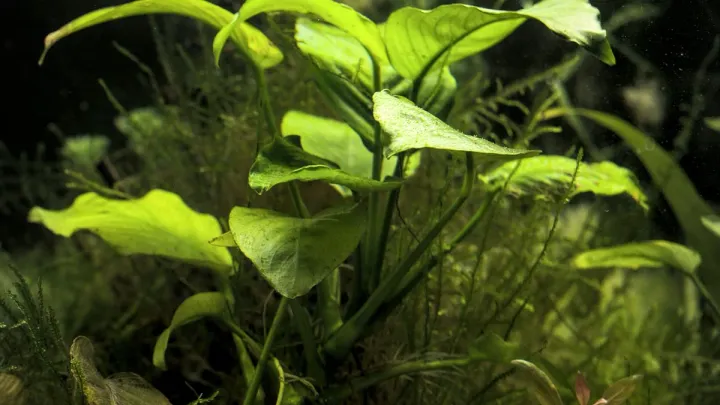
A betta in a bare, brightly lit tank has nowhere to feel safe, so it presses into the one shadow it can find. Fix: give it choices — live or silk plants and at least one cave — and dial the light down or shorten how long it’s on. Counterintuitively, more hiding spots usually mean a betta spends less time hidden, because it stops feeling exposed.
How to Coax a Shy Betta Out of Hiding
If conditions are good and your betta is just timid, you can gently build its confidence. Don’t force it — chasing it with a net or tapping the glass does the opposite of what you want.
- Feed on a schedule, in the same spot. Bettas learn fast. Drop food at the same time and corner each day and most will start coming out to meet you — food is the best bribe there is.
- Add more cover, not less. It sounds backwards, but a betta with several safe retreats roams more freely than one in a bare tank. Plants and caves let it venture out knowing safety is a dart away.
- Move slowly near the tank. Approach calmly, avoid sudden shadows overhead (they read as predators), and skip the glass-tapping.
- Dim the lights for a while. Lower light makes many bettas bolder. A planted, shaded tank feels safer than a bright, empty box.
- Let it set the pace. Especially with a new fish, the fastest route to a confident betta is simply consistency over a week or two. Forcing interaction sets you back.
If it’s still glued to its hideout after a couple of weeks of good conditions, treat that as a signal — re-check the water and look for the illness signs below. Persistent, sudden hiding can mean your betta is stressed or lethargic rather than merely shy.
When Hiding Signals Illness
Hiding by itself is rarely an illness. It’s the company it keeps that matters. Many betta diseases — fin rot, ich, swim bladder issues, internal infections — make a fish feel vulnerable, and a vulnerable betta hides. Look for hiding plus:
- Clamped fins held tight to the body
- Faded or washed-out color
- White spots (ich), frayed or receding fins, or cottony patches
- A swollen belly, or scales standing out like a pinecone
- Lethargy or labored breathing, or sitting motionless on the bottom — see why a betta lies at the bottom
- Refusing food, even its favorite treat
If your betta is hiding and showing one or more of these, your first job is still the water — poor conditions cause or worsen most betta illnesses, so test and correct ammonia, nitrite, and temperature right away.
Know the limit of a care guide
But here’s the honest limit of a care guide like this one: if the symptoms persist after you’ve corrected the water and temperature, you’re past what a hobbyist checklist can safely diagnose. I research betta care closely, but I’m not a vet — and guessing at medications can do more harm than the disease. At that point, the right move is a qualified aquatic veterinarian, who can actually diagnose what’s going on.
FAQ
Q.Why is my betta hiding all the time all of a sudden?
Sudden hiding in a tank your betta was already comfortable in usually means something changed — most often water quality or temperature. Test ammonia and nitrite (both should be 0) and confirm 78–80°F before looking at anything else.
Q.Why is my new betta hiding so much?
This is extremely common and almost always temporary. A new betta is stressed from the move and needs time — usually one to two weeks — to feel safe. Keep the tank calm and dim, but still test the water, since new tanks are the most likely to have unstable conditions.
Q.Why does my betta hide behind the filter?
Often because it’s seeking the freshest, most oxygenated water — which can hint at a water-quality problem — or to escape a current that’s too strong. Test your water, and consider baffling the filter outflow with a sponge to soften the flow.
Q.Is it normal for a betta to hide in its plants or cave?
Yes. Bettas come from densely planted, shallow water and naturally rest in cover. A betta that hangs out in its plants but still eats, swims, and looks healthy is behaving exactly as it should.
Q.My betta is hiding and not eating — should I worry?
Hiding plus a refusal to eat is worth investigating. Check water and temperature first, since both kill appetite and drive hiding. If your betta still won’t eat after conditions are corrected — or shows other symptoms — consider reading more on betta body language and consult an aquatic vet.
Q.Will adding hiding spots make my betta hide even more?
No — usually the opposite. A betta with several safe retreats feels secure enough to explore openly, while a fish in a bare tank stays pinned in the only shadow it has. More cover tends to mean a bolder, more visible betta.
Sources & Further Reading
- Wikipedia — Siamese fighting fish (Betta splendens) — natural habitat, behavior, and flaring at reflections.
Most hiding is your betta being a betta. Get the water and temperature right, give a shy fish time and good cover, and watch for the symptoms that change hiding from “normal” to “see a vet.” For the full picture, start with our complete betta care guide. 🐠